Home Truss Systems Construction Methods Preservation About Contact Privacy Policy Terms of Service

Covered Bridge History and Timber Frame Engineering

A reference archive documenting the structural logic, construction traditions, and preservation record of covered wooden bridges across Canada — from the Howe truss spans of New Brunswick to the queenspost frames of rural Ontario.

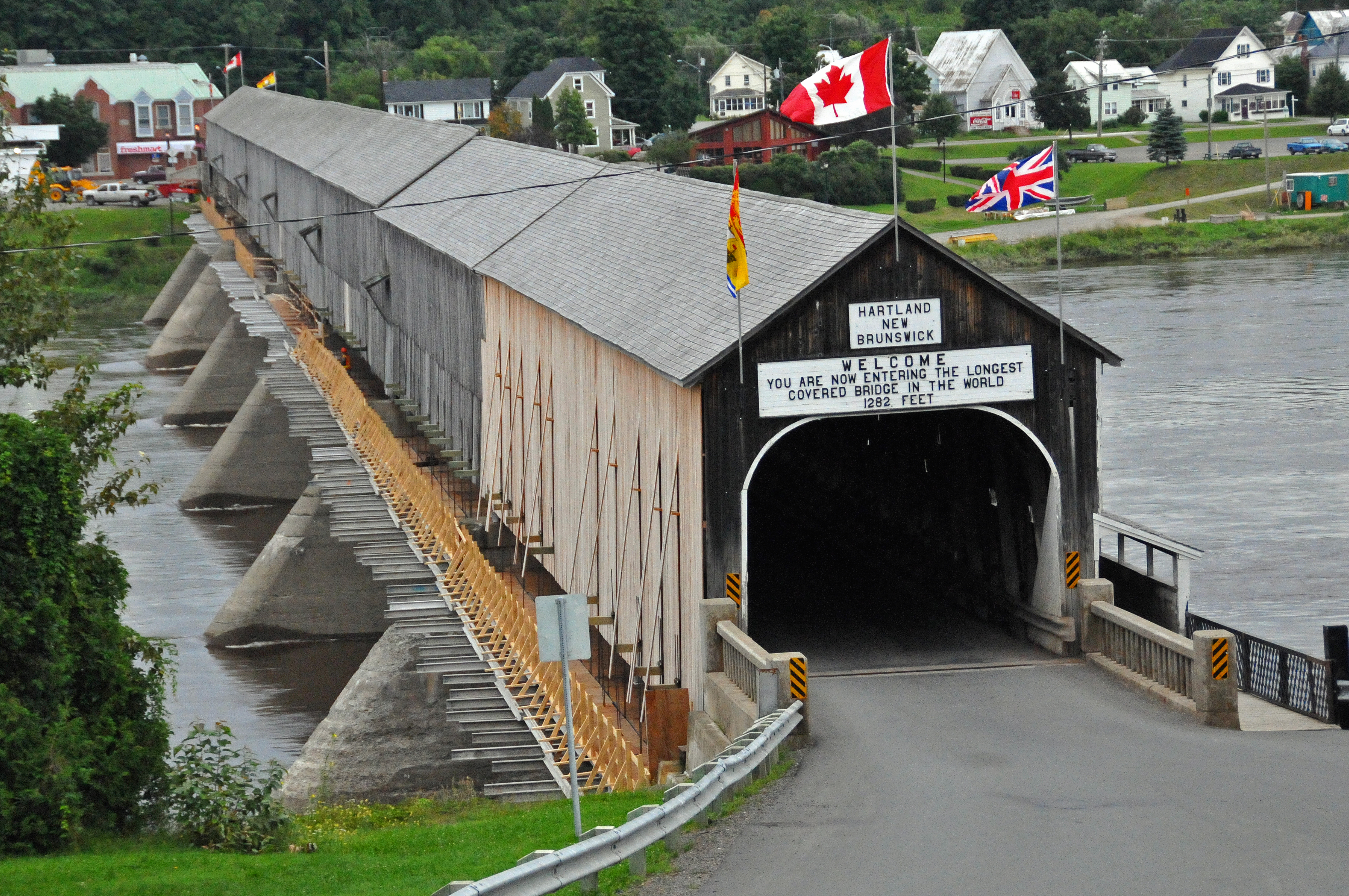
Hartland Covered Bridge, New Brunswick — the world's longest covered bridge

Three Areas of Study

The archive is organized around three interconnected topics: the structural systems used in wooden bridge engineering, the construction practices employed by 19th-century Canadian bridge builders, and the ongoing challenge of maintaining these structures in place.

Hartland Covered Bridge exterior view, 2008
Structural Engineering Timber Truss Systems in Covered Bridges

An examination of the Howe, Burr arch, Town lattice, and queenspost truss configurations used in Canadian covered bridge construction, with attention to load distribution and lateral bracing.

Updated May 2026
Interior view of Hartland Bridge showing timber framing
Construction History Covered Bridge Construction Methods in Canada

How 19th-century builders sourced local timber, assembled truss panels on-site, and solved the problem of spanning wide rivers without steel — the practical knowledge behind wooden bridge construction.

Updated May 2026
Hartland Covered Bridge, a heritage structure in New Brunswick
Heritage Preservation Preservation of Historic Wooden Bridges

The structural, environmental, and financial factors that shape decisions about repairing, rehabilitating, or replacing covered bridges — and what Canadian heritage programs have managed to retain.

Updated May 2026

The Hartland Bridge: 391 Metres of Timber Framing

Spanning the Saint John River in New Brunswick, the Hartland Covered Bridge has been in continuous use since 1901. Its seven Howe truss spans represent one of the most thoroughly documented examples of 19th-century wooden bridge engineering still standing in Canada. The structure was designated a National Historic Site in 1999.

Read the Truss Analysis

Key Facts in Canadian Covered Bridge History

Numbers drawn from provincial heritage surveys and the Canadian covered bridge census conducted by the Historic Bridges Foundation.

~160
Covered bridges remaining in Canada as of 2024
1901
Year Hartland Bridge opened — the world's longest covered bridge
391 m
Length of Hartland Bridge across the Saint John River

Why Bridges Were Covered

The roof and siding of a covered bridge served one purpose: protecting the timber deck and structural members from rain and snow. An exposed wooden deck could deteriorate within a decade under Canadian weather conditions. The covering extended the functional lifespan of a bridge to 80 or 100 years.

This practical origin is often misread. The enclosure was not decorative and was not intended to shelter travellers — though it did. It was a structural maintenance strategy that made the investment in timber framing economically viable over the long term.

Construction Methods

New Brunswick's Covered Bridge Inventory

New Brunswick retains the highest concentration of covered bridges of any Canadian province — roughly 58 structures across 15 counties. The majority date from the period 1870–1920 and use Howe truss or Burr arch construction. Several remain in daily vehicular use.

Preservation Overview

Truss Configurations at a Glance

Four timber truss systems account for most surviving Canadian covered bridges. Each offered a different balance of material cost, span capacity, and ease of assembly.

Howe Truss

Developed in 1840 by William Howe. Uses diagonal timber compression members and vertical iron tension rods. The most common configuration in New Brunswick bridges, well-suited to spans between 30 and 60 metres.

Burr Arch Truss

A multiple kingpost truss combined with a long-timber arch chord. Theodore Burr patented this design in 1817. The arch carries most of the load under heavy traffic, making the truss a secondary system.

Town Lattice

Ithiel Town's 1820 design uses a dense diagonal lattice of planks, bolted at intersections. No heavy timber is required — the lattice distributes loads across many small members. Simpler to build, but less efficient on long spans.

Queenspost Truss

An older form with two vertical queen posts and a central panel. Suitable for modest spans under 20 metres. Found in early Ontario and Quebec bridges where spans were shorter and timber was plentiful.

Kingpost Truss

The simplest timber truss — a single central vertical post with two diagonal rafters. Used for footbridges and short vehicular spans, typically under 12 metres. Often the first truss form a region's builders mastered.

Long Truss

Stephen Long's 1830 design introduced X-braced panels with counter-braces. It handled both tension and compression in timber alone, without iron. Less common in Canada but present in several heritage spans in Ontario.

Structural Decline and What It Means for Heritage

Covered bridges in Canada face three converging pressures: vehicle load increases that exceed original design parameters, deferred maintenance due to limited municipal budgets, and the loss of the specialist knowledge needed to repair timber truss joints correctly. Understanding why these structures were built the way they were is a prerequisite for any responsible rehabilitation program.

Read the Preservation Analysis

Contact the Archive

For questions about specific bridge structures, historical documentation, or the engineering references used in these articles, use the contact form on the About page.

Get in Touch